You should put one primary keyword and two to three semantically related secondary modifiers that naturally describe the contextual boundaries of the target page. If you are stuffing five unrelated phrases into a 500-character description just to hit a quota, you are destroying the topical relevance vector.
Pinterest has a very advanced search engine and will look for relevance, context and entity links.
Semantic Structure Of Pinterest Pin Descriptions
Traditionally people will include keywords within their Pin Descriptions.
A short paragraph of text that will help the search engine understand what your destination URL is about.
You are building your semantic graph from this so it’s important to include only the keywords that are relevant to your main keyword.
For example if your main keyword is ‘small kitchen storage’ then your vector space will only have keywords related to this.
Sub Headings: Quantity vs Relevance
Why you shouldn’t focus on quantity:
Many people will ask how many keywords they should include in their Pin Description. Is it 3, 5, 10 keywords?
This is an old-school keyword stuffing tactic.
Pinterest will not reward you for including a certain amount of keywords. They will reward you for being comprehensive with your keywords.
By including a list of keywords (small kitchen storage, kitchen organisation, tiny home hacks, cheap shelves, apartment storage ideas) this could cause confusion.
Use your Pinterest Keyword Tool to identify your main keyword and related keywords.
(Main: small kitchen storage, Related: cabinet organisation, space saving ideas).
Contextual Relevance:
Semantic search engines look to see how frequently words are used.
If your landing page is about small kitchen storage then you would expect to see keywords like shelving units, pantry bins and vertical space.
Using a professional Pinterest keyword tool will show you what keywords are key to building context for your users’ searches.
Bad Description: Get the best small kitchen storage, kitchen decor, home organisation and DIY shelving for your home today!
Better Description: Improve your cooking space by implementing some clever small kitchen storage and cabinet organisation ideas. Learn how to use vertical space to make your counters more spacious!
How To Find Related Keywords Using Pintrendo?
Let’s say your destination page is about small kitchen storage ideas for apartments.
You know your main keyword but aren’t sure what supporting keywords to include in your Pin Description.
You can use the Pintrendo Pinterest Keyword Tool.
Simply type in your main topic and look through the related keywords.
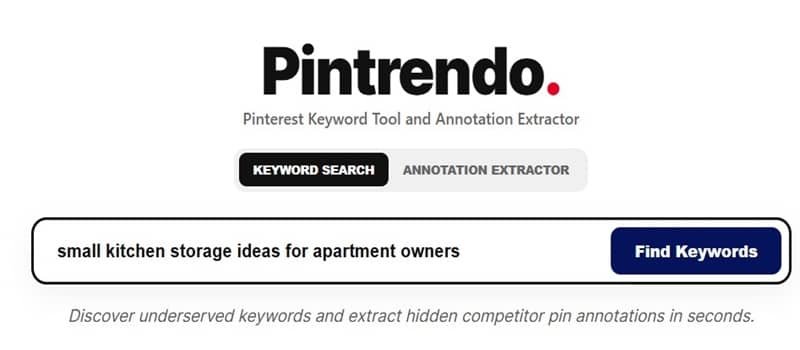
Choose any phrases that match your destination page content.
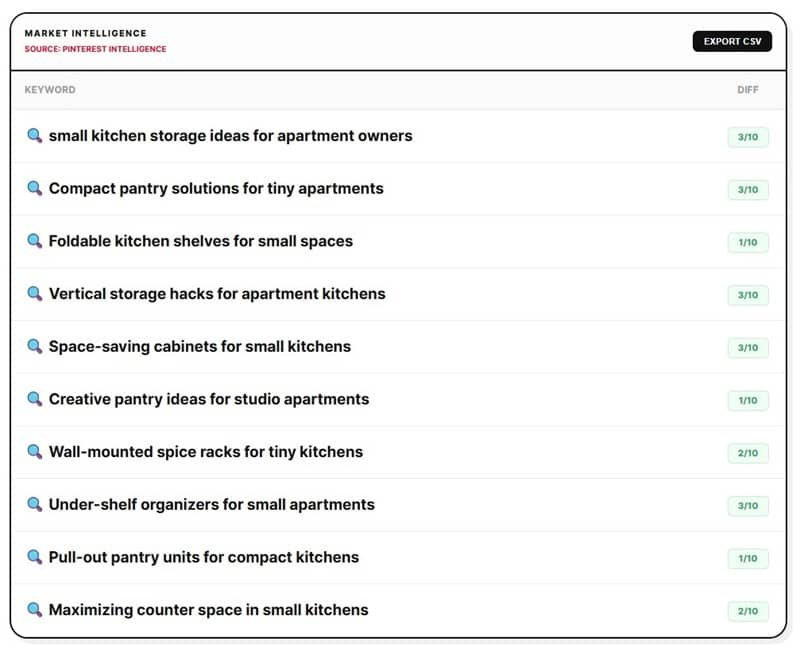
For example:
Main Keyword: Small kitchen storage.
Related Phrase: foldable kitchen shelves.
Supporting Idea: wall mounted spice racks.
If your article mentions cabinet organisation ideas and ways to use foldable kitchen shelves then these phrases will make your page more descriptive.
However if your article does not mention anything about kitchen decor or DIY shelving then you won’t include them.
Using related keywords will improve your Pinterest keyword research.
You will be choosing the right keywords that fit together in your Pin Description.
Why Entity Based Descriptions Will Give A High CTR?
Don’t try to be cunning with your Pinterest descriptions. They should be focused on the users intent.
Be Specific: Explain what your destination page has to offer.
Know Your Audience: Let them know who it’s for. (Apartment living, Home cooks.)
Give A Reason: Give them a reason to click through from your feed.
If your Pinterest descriptions match with what you found from Pinterest keyword tool then Pinterest will know that your content is an expert answer to this query.
Final Thoughts
Focus and ensure that the keywords in my Pinterest Pin Descriptions are describing the destination page.
Keep it simple. Start with your main keyword. Add a couple of related phrases. Remove any irrelevant content.
Pinterest Keyword Tool from Pintrendo can help me find related search terms. The content on the page will help me decide what terms to include.
Note that keyword research is all about selecting the right keywords.
If the primary keyword, other keywords, Pin description and landing page are all relevant to each other then both Pinterest and the reader will be able to understand what your content is all about.
<< Back To Pinterest Keyword Research FAQs