Yes, you should use different keywords to target your service based business due to the different search intent. Your E-commerce keywords will focus on the product and will include specific details like ‘Linen Duvet Cover’ and ‘Boho Living Room Decor’. Your service keywords will be about solving a problem, achieving a goal or planning. Examples are ‘Small Bathroom Remodel Ideas’ and ‘Wedding Day Timeline’. Whilst the platform is the same, the search intent behind the searches are different and so your keywords should reflect this.
This answer belongs to the Pinterest Keyword Research FAQ, the hub that connects every keyword question covered in this series.
Why are Service and Ecommerce Keywords different on Pinterest?
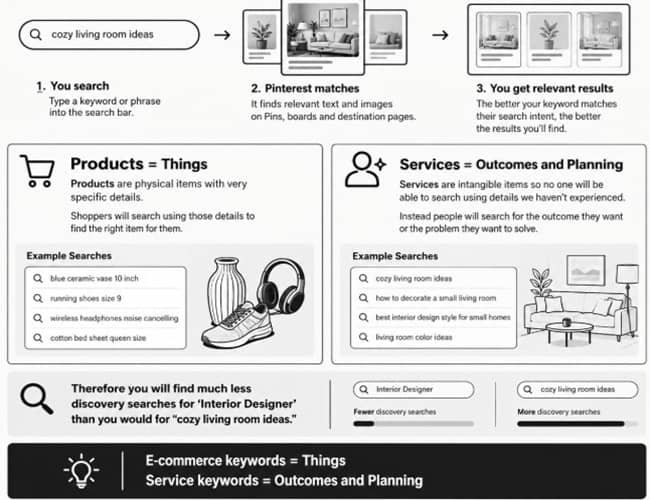
Pinterest is a visual search engine, if you type a search term into the search bar it will match your search to relevant text and images on the Pins, boards and destination pages.
The better your keyword matches their search intent, the better results you will find.
Products are physical items with very specific details.
Shoppers will search using those details to find the right item for them.
Services are intangible items so no one will be able to search using details we haven’t experienced.
Instead people will search for the outcome they want or the problem they want to solve.
Therefore you will find much less discovery searches for ‘Interior Designer’ than you would for “cozy living room ideas.”
E-commerce keywords = Things
Service keywords = Outcomes and Planning
How does search intent affect your choice of keywords on Pinterest?
Most Pinterest searches are for Inspiration, Planning and Selection. Depending on your business model, you will find people at different points.
E-commerce = People often search for selection. They know what they are looking for and will be comparing products. Product + Attribute keywords work well.
Services = People will take longer to get to selection. They will be researching lots of ideas and creating checklists.
If your service business keywords only include job titles like ‘Photographer’ and ‘Accountant’ you are missing out on all the main phases of Pinterest.
If your store keywords only include general inspiration keywords you will attract browsers who will never make it to your products. It is important to match the phase of the search.
What keywords should services use on Pinterest?
Services should focus on goal orientated keywords:
Outcomes = Organised Pantry Ideas, Healthy Meal Prep for Beginners, Backyard Patio Makeover
Planning = Wedding Planning Checklist, Moving House Timeline, “budget planner for freelancers.”
Evidence = Before & After Bathroom Remodel, Brand Identity Examples
Education = How To Choose A Paint Colour, What To Wear For Family Photos
These will provide you with a useful Pin and naturally lead people to your service. Your destination page should then explain how you can help achieve that outcome.
What keywords should stores use on Pinterest?
E-commerce brands should use attribute based keywords:
Product + Attribute = Ceramic Planter Set, Oversized Wool Sweater
Style/Aesthetic = Coastal Grandmother Decor, Minimalist Gold Jewellery
Occasion/Gift = Gifts For New Moms, Housewarming Gift Ideas
Seasonal = Autumn Porch Decor, Christmas Table Setting
Products are more seasonal so you will have clearer peaks in demand. When publishing to your store this should be considered as part of your keyword strategy.
How Pintrendo Solves the Guessing Problem
Service owners often want to assume people will search for their service name and shop owners will assume people search for their product title.
This is often incorrect. With the Pintrendo Pinterest keyword tool you can view what people are actually searching for, see related suggestions and similar variations.
This will allow you to create a list of keywords based on what people are searching for.
For a service business this will usually mean finding outcome based keywords you wouldn’t have thought of.
For a store it will show you what attribute based keywords people are using.
To learn the whole process from seed terms to clustering check out our Pinterest Keyword Research Guide.
Final Thoughts
The key takeaway here is your Pinterest keywords should match how your buyer thinks, not how you have organised your products.
A good test is to think if someone could type your keyword before they even knew who you were.
If your keyword includes your brand name, job title or internal terms then it doesn’t work.
Both businesses can also take one tactic from the other. Services can create a physical item like a checklist, template or pricing guide.
This will give your intangible service attributes which keywords will match.
E-commerce brands can create how to and styling content to capture the inspiration phase and lead people to your product.
If you offer a hybrid product (like a Photographer selling Presets) then you should create 2 sets of keywords and have 2 separate boards. This way everyone will be seeing the same signals.
<< Back To Pinterest Keyword Research FAQs